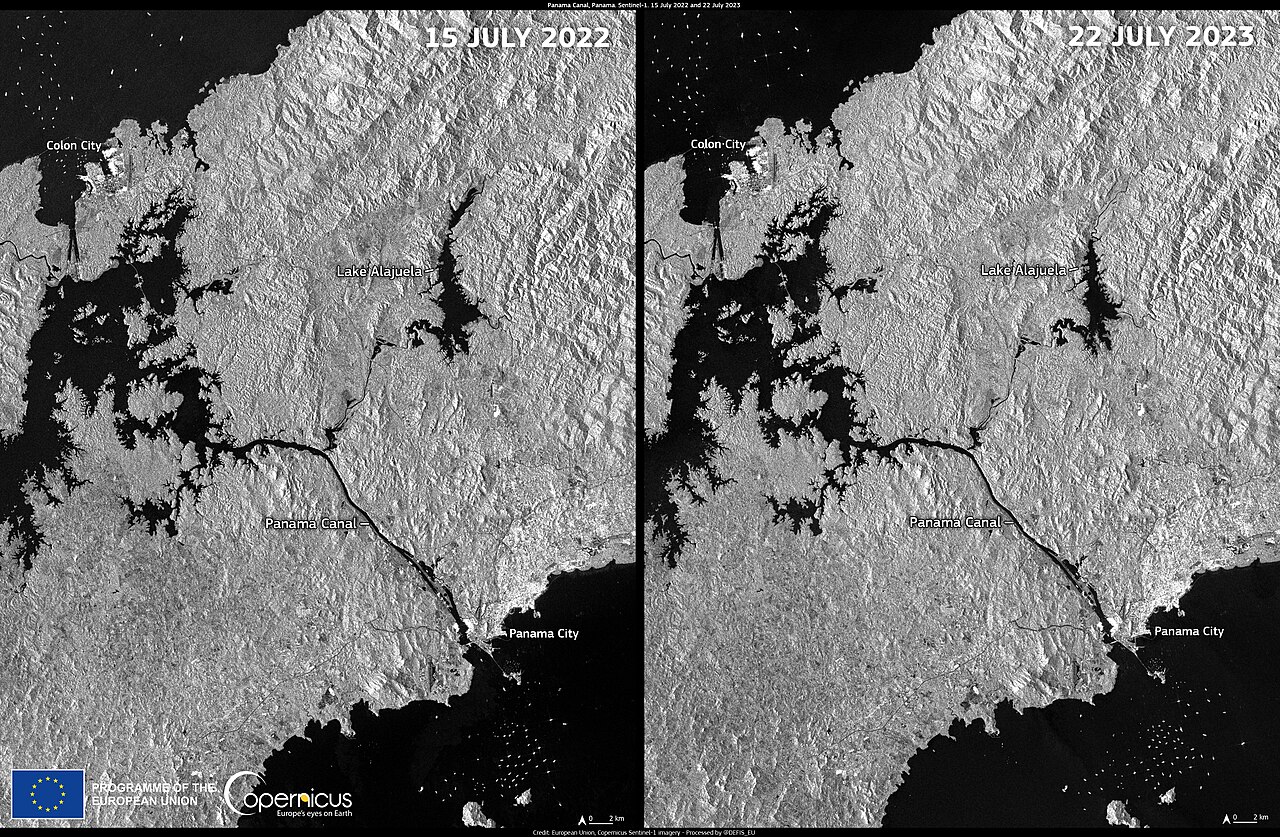
The Panama Canal is set to impose unprecedented restrictions on daily vessel transits, reducing the number of ships passing through from 36 to 32 vessels starting September 15, due to persistent drought conditions. According to a warning issued by logistics company Kuehne+Nagel on August 24, the Panama Canal Authority announced these measures following below-average rainfall during May to August.
Historic Drought Affects Canal Operations
The Panama Canal Authority cited “below-expected precipitation” as the primary cause for the new restrictions. Rainfall levels in the region were reported to be 34% below the historical average for the period from May to August, according to a Supply Chain Brain report. This marks only the second time in the canal’s history that such drastic measures have been implemented to safeguard long-term sustainability.
Impact on Shipping Routes
The reduction in transit capacity is expected to significantly affect shipping schedules and logistics planning for vessels navigating the Panama Canal. Shippers and logistics firms must adjust their routes and schedules to accommodate the reduced capacity, which could lead to increased wait times and delays.
The Panama Canal Authority’s decision reflects a careful assessment of water levels and the necessity to preserve the canal’s operational integrity in the face of unprecedented drought conditions. Supply Chain Brain noted that the canal's operational efficiency is crucial for global maritime trade, particularly for cargo moving between the Atlantic and Pacific Oceans.
Strategic Adjustments Required
Shippers and logistics providers are advised to plan ahead for potential delays and increased costs due to the reduced vessel traffic. The restrictions may necessitate rerouting through alternative waterways or adjusting cargo loads to comply with the new transit limits.
According to the Panama Canal Authority, the move aims to secure the canal’s long-term sustainability and ensure its continued operation as a critical link in global maritime trade.
What This Means for Operators
The restriction on daily vessel traffic through the Panama Canal is likely to cause significant disruption for shipping operators. With capacity reduced to 32 vessels per day from September 15, operators must prepare for extended wait times and possibly reroute through alternative waterways. The implications for cargo schedules and costs are substantial, necessitating proactive planning and flexibility in logistics operations.
The canal’s move underscores the critical interplay between environmental factors and global trade infrastructure. For ship operators, this highlights the need for robust contingency planning to mitigate the impact of such unforeseen disruptions.