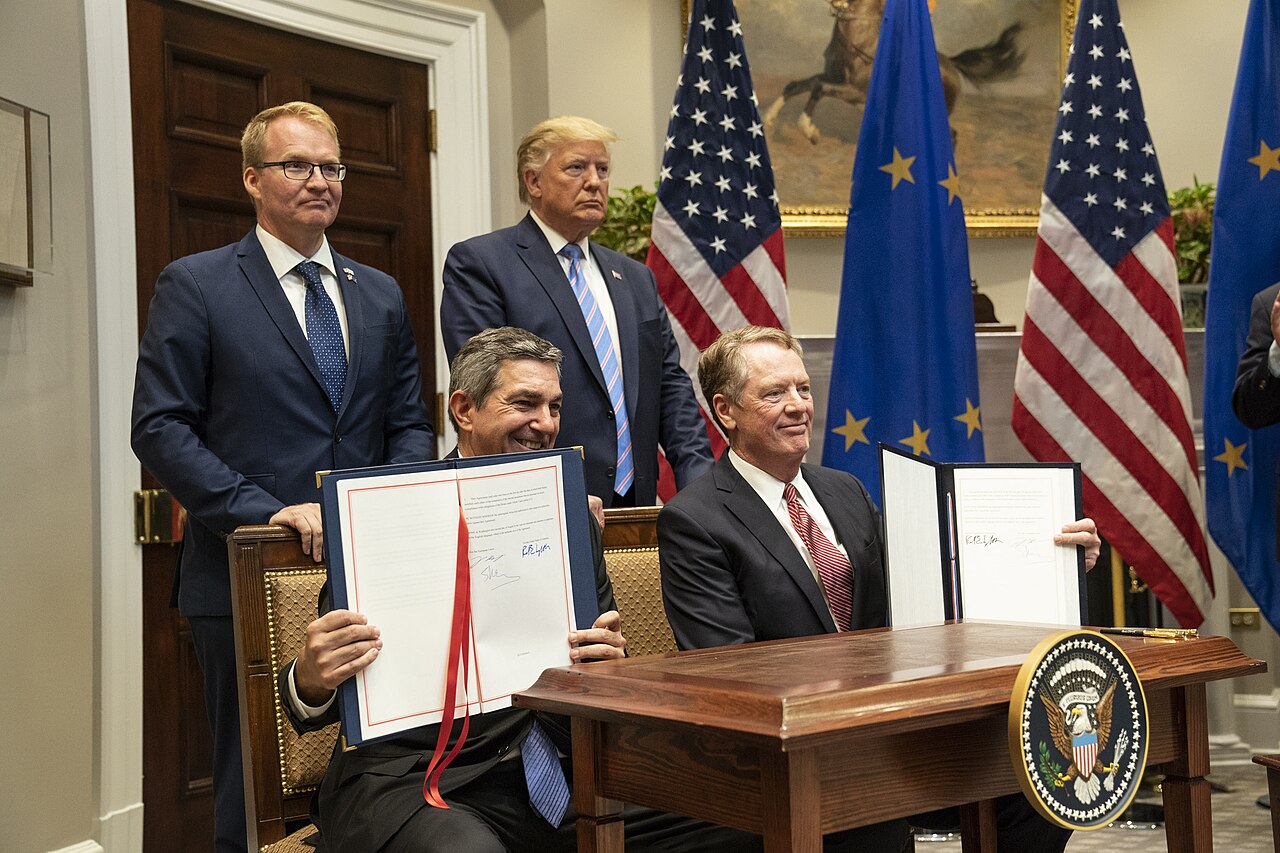
The United States has called on the European Union to deliver on its commitments regarding sustainability laws within the framework of a trade agreement reached last summer. According to a statement from the U.S. ambassador to the European Union, the bloc has not fully addressed U.S. concerns, which have been a significant barrier to the agreement's implementation.
Background and Agreement
The trade framework agreement, signed last summer, was designed to foster closer economic ties between the United States and the European Union. However, the U.S. has expressed ongoing dissatisfaction with the EU's approach to sustainability, particularly regarding environmental regulations and standards.
U.S. Concerns
According to the U.S. ambassador, the EU's stance on sustainability laws poses a challenge to the agreement. The United States has specifically raised concerns about the EU's Green Deal, which includes ambitious climate and environmental targets. These targets are seen by the U.S. as potentially restricting market access and imposing undue regulatory burdens on U.S. businesses operating in the EU.
“We have not seen the EU deliver on its commitments to ensure that the trade agreement fully aligns with our mutual goals for sustainability,” the U.S. ambassador stated in a recent press release.
Implications for Maritime Trade
The impasse between the U.S. and the EU could have significant implications for the maritime trade sector. Ship operators and logistics companies operating between the two regions are likely to face increased regulatory compliance costs and potential disruptions in trade flows. The EU's Green Deal includes provisions that could affect the type of vessels allowed to enter European ports, as well as cargo handling and transportation methods.
“Shippers and carriers must prepare for potential changes in port regulations and increased scrutiny on environmental performance,” said a spokesperson for a major maritime trade association.
What this means for operators
The ongoing dispute between the U.S. and the EU on sustainability laws could lead to increased regulatory compliance costs for ship operators. Vessels may need to undergo additional certifications and undergo more stringent inspections to ensure they meet EU standards. This could result in higher operational costs and longer transit times, impacting overall efficiency and profitability in the maritime trade sector.
The situation highlights the need for clearer and more harmonized regulatory frameworks to facilitate smoother trade between the U.S. and the EU, particularly in the context of global sustainability goals.