In the food, gastronomy and packaging sectors, a mis‑calculated reorder point (ROP) can mean either a costly stock‑out or a surplus that ties up working capital. Procurement managers therefore need a clear brief for suppliers, a robust verification regime, and an understanding of how logistics choices affect the calculation. This guide walks you through each of those layers, using concrete examples that reflect the variability of demand in restaurants, retail food packs and bulk‑supply packaging.
Defining the Reorder‑Point Requirement
The first step is to turn the abstract concept of “reorder‑point calculation” into a concrete specification. A typical ROP formula is:
ROP = (Average demand per period × Lead time) + Safety stock
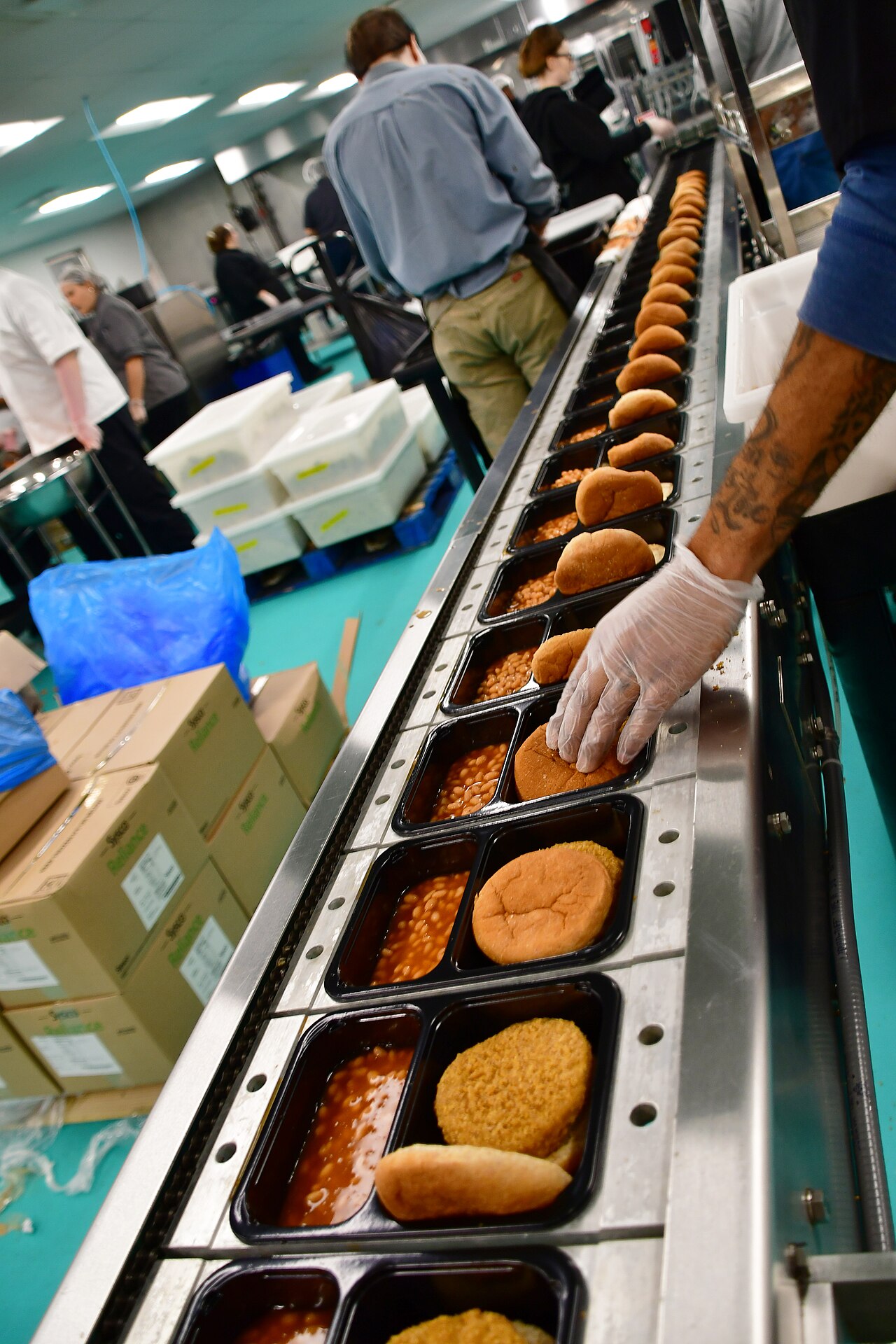
For a mid‑size catering firm that uses 5 000 polymer trays per month, a three‑week supplier lead time (0.75 month) yields a base demand component of 3 750 units. The safety stock must reflect both demand volatility and lead‑time uncertainty. If historic monthly demand has a standard deviation of 800 units and lead‑time variance is 0.2 month, the combined standard deviation (σ) is calculated as:
σ = √[(σ_demand² × LT) + (Avg demand² × σ_LT²)] = √[(800² × 0.75) + (5 000² × 0.2²)] ≈ 1 050 units.
Choosing a 95 % service level (z‑score ≈ 1.65) gives a safety stock of 1 650 units, and a final ROP of 5 400 units.
When you draft the supplier brief, include the following elements:
- Data cadence: demand and lead‑time data to be supplied weekly, monthly or per production run.
- Statistical method: specify whether the supplier must use a simple moving average, exponential smoothing or a more advanced demand‑forecasting model.
- Review frequency: ROP must be recalculated at least every quarter, or whenever a demand‑pattern shift exceeds a predefined threshold (e.g., 10 % change in average demand).
- Reporting format: a CSV file or API feed that includes demand, lead time, σ, safety stock and the resulting ROP.
- Exception handling: clear escalation steps if actual consumption deviates from forecast by more than 20 % over two consecutive periods.
Edge cases are common. Seasonal spikes during holiday catering can double demand for a two‑week window, while new product launches may start with a “zero‑historical‑data” situation. In those cases, the brief should allow the supplier to use a hybrid approach—combining market‑trend inputs with a higher safety‑stock multiplier (e.g., z = 2.33 for 99 % service) until sufficient consumption data accumulates.
Key Supplier Credentials and Verification
Even a perfectly written brief is useless without a supplier who can deliver the calculation reliably and in compliance with food‑safety regulations. Verification should be a staged process.
1. Certification audit – Request up‑to‑date certificates such as ISO 9001:2015 (quality management) and ISO 22000:2018 (food‑safety management). For packaging that contacts food, the supplier must demonstrate compliance with Regulation (EU) No 1935/2004 and, where applicable, Regulation (EU) No 10/2011 for plastic materials. The British Retail Consortium Global Standard (BRCGS) for Food Safety, version 9, is also widely recognised in the UK market.
2. Third‑party audit report – If you cannot conduct an on‑site audit, obtain a recent audit report from an accredited body (e.g., SGS, Bureau Veritas). The report should cover the supplier’s data‑management system, traceability of raw material batches, and the statistical methods used for safety‑stock calculation.
3. Sample order trial – Place a limited‑volume order (e.g., 2 000 trays) and track the actual lead time, the ROP supplied by the vendor, and the on‑hand inventory at the moment of replenishment. Compare the supplier’s forecasted ROP with the observed consumption to validate the model’s accuracy.
4. Ongoing performance metrics – After the trial, require a monthly dashboard that records:
- Forecast accuracy (Mean Absolute Percentage Error, MAPE).
- Lead‑time adherence (percentage of deliveries on or before the quoted lead time).
- Safety‑stock utilisation (average stock‑on‑hand relative to the calculated safety buffer).
These metrics become part of a service‑level agreement (SLA). If any indicator falls below the agreed threshold—say, MAPE exceeds 15 % for two consecutive months—the contract should trigger a corrective‑action plan.
Special attention is needed for suppliers that operate across multiple jurisdictions. A Chinese manufacturer may hold ISO 9001 certification but still need to demonstrate that its packaging complies with the EU’s specific migration‑testing requirements for food contact. Request the relevant test reports (e.g., overall migration, specific migration for substances such as phthalates) and confirm that the testing laboratory is accredited under EN ISO 17025.
Managing Overseas Sourcing Risks
Overseas sourcing can reduce unit cost but introduces variables that directly affect ROP calculations.
Lead‑time volatility – In addition to the quoted production time, you must factor customs clearance, port‑to‑warehouse drayage and potential quarantine inspections. Historical data from similar shipments often shows a standard deviation of 3–5 days for sea freight from East Asia to the UK. Incorporate this variability into the safety‑stock component of the ROP.
Regulatory divergence – Some countries follow different food‑contact material standards (e.g., US FDA 21 CFR 174–179 versus EU regulations). A mismatch can cause shipments to be held at the border, effectively extending the lead time unexpectedly. Verify that the supplier’s product specifications are pre‑approved for the destination market before the first order.
Currency and payment exposure – Exchange‑rate fluctuations can make a previously acceptable unit cost suddenly unviable, prompting the buyer to delay or cancel orders. To mitigate this, negotiate a price‑review clause linked to a recognised index (e.g., the EUR/USD 30‑day average) and consider forward contracts for larger volumes.
Intellectual‑property and data security – When the ROP model itself is a proprietary algorithm, ensure the contract includes a confidentiality clause and, where feasible, a non‑compete provision for the specific product family.
In practice, a UK‑based ready‑meal producer that sourced polymer trays from a Vietnamese supplier experienced a 12‑day delay during a regional port strike. The unexpected delay increased the actual safety stock by 30 %, eroding the intended inventory cost savings. The lesson: maintain a buffer of at least one extra production cycle in the safety‑stock calculation for high‑risk routes, and keep a secondary supplier in a different region as a contingency.
Incoterms, Lead Times and Their Effect on ROP
Incoterms determine who bears risk and cost at each stage of the journey, and therefore influence the “effective” lead time that appears in the ROP formula.
FCA (Free Carrier) – The supplier delivers the goods to a named carrier at a specified location (often a port). From that point, the buyer assumes responsibility for main carriage and customs. FCA is useful when the buyer wants control over freight forwarder selection, but the buyer must add the onward‑transport time to the quoted lead time.
DAP (Delivered at Place) – The supplier handles carriage to the buyer’s warehouse, bearing risk until delivery. DAP can simplify ROP calculations because the lead time quoted by the supplier already includes most transport phases. However, any customs duties or import clearance delays still fall on the buyer, so a small “clearance buffer” (typically 1–2 days) should be added to the safety stock.
CIP (Carriage and Insurance Paid to) – Similar to DAP but the supplier also provides insurance. This term is appropriate when the goods are high‑value or fragile, as insurance claims can otherwise extend the effective lead time.
When you negotiate the contract, request a “lead‑time breakdown” that lists:
- Production time.
- Loading and inland transport to the departure port.
- Ocean freight duration (including expected weather buffers).
- Customs clearance time at the destination.
- Final inland delivery to the warehouse.
Plug the summed figure into the ROP model, then apply the safety‑stock multiplier. If the supplier uses a different incoterm than you expected, recalculate the lead time accordingly—otherwise you risk ordering too late and triggering a stock‑out.
Three Actionable Tips for Ongoing Success
1. Build a dynamic safety‑stock model. Use a rolling‑window calculation for demand variance (e.g., the last 12 weeks) and automatically update the safety‑stock factor each month. This keeps the ROP responsive to seasonal swings and sudden demand spikes typical in gastronomy.
2. Adopt dual‑sourcing for critical packaging. Identify the top‑10 SKUs by volume and qualify at least two geographically distinct suppliers. If one supplier’s lead time elongates due to a port strike, you can switch to the alternate without resetting the ROP calculation.
3. Align data exchange cycles. Synchronise the supplier’s ERP reporting schedule with your own inventory review cadence. For example, if your system runs a weekly replenishment run on Mondays, require the supplier to deliver updated forecast and lead‑time data by the prior Friday. This prevents hidden “lead‑time drift” where the supplier’s internal planning lags behind your ordering rhythm.
FAQ
What is the minimum data frequency a supplier should provide for ROP calculations? Weekly data is ideal for fast‑moving packaging, but a minimum of monthly updates is acceptable for slower‑turning items. The key is consistency so the safety stock can be refreshed regularly.
How do I verify a supplier’s compliance with EU food‑contact material regulations? Request the latest overall migration test report and any specific migration results for regulated substances. Ensure the testing laboratory is accredited to EN ISO 17025 and that the reports reference Regulation (EU) No 1935/2004 and, where relevant, Regulation (EU) No 10/2011.
Can I use a simple fixed safety‑stock amount instead of a statistical model? You can, but it is less responsive to demand volatility. A fixed buffer may lead to over‑stocking during low‑demand periods or under‑stocking when demand spikes, especially in seasonal gastronomy cycles.
What incoterm should I choose for a supplier located in the EU but shipping to the UK? FCA (Free Carrier) to a UK port is common, as it lets you control the freight forwarder and customs process while keeping the supplier’s responsibility limited to loading the goods onto the carrier.
How often should I audit a supplier’s ROP performance? Conduct a formal audit at least once per year, supplemented by quarterly performance‑metric reviews (forecast accuracy, lead‑time adherence, safety‑stock utilisation). This cadence balances oversight with operational efficiency.
This article is provided for general information and education. It does not replace professional advice.